
Quarterly Insights from America’s Families is Capita’s standing national survey conducted in partnership with YouGov. It is designed to function as an early warning system for family well-being, providing a continuous, reliable read on how families with children are actually doing over time. We want to see whether families are stabilizing, stagnating, or slipping and to understand what’s driving those changes. Quarterly Insights tracks households with children under 18 across three dimensions: stability (can families meet basic needs without falling into crisis?), predictability (can they plan their lives without constant disruption?), and quality of life (do they have the time, health, and connection to flourish, not just survive?).
This wave takes a closer look at Michigan, where parents consistently report higher rates of financial hardship, housing instability, and schedule volatility than their national counterparts. Across the state, families are reporting stress and strain at rates that not only persist from last quarter, but in some cases, are getting worse.
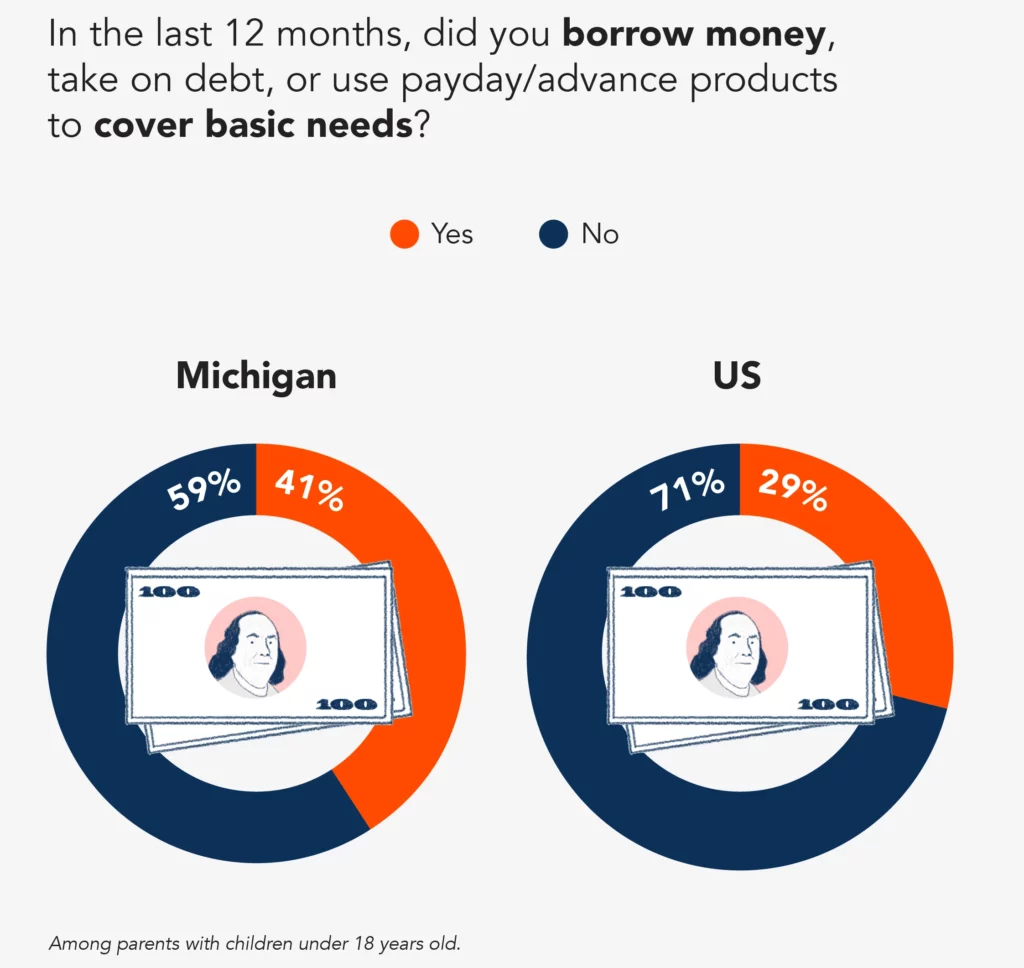
- Stability: Over 40% of Michigan parents reported borrowing money, taking on debt, or using payday or cash advance products to cover basic needs in the last year, a 7-point increase from last quarter and well above the national average of 29%. For families earning under $30k, that figure climbs to 54%.
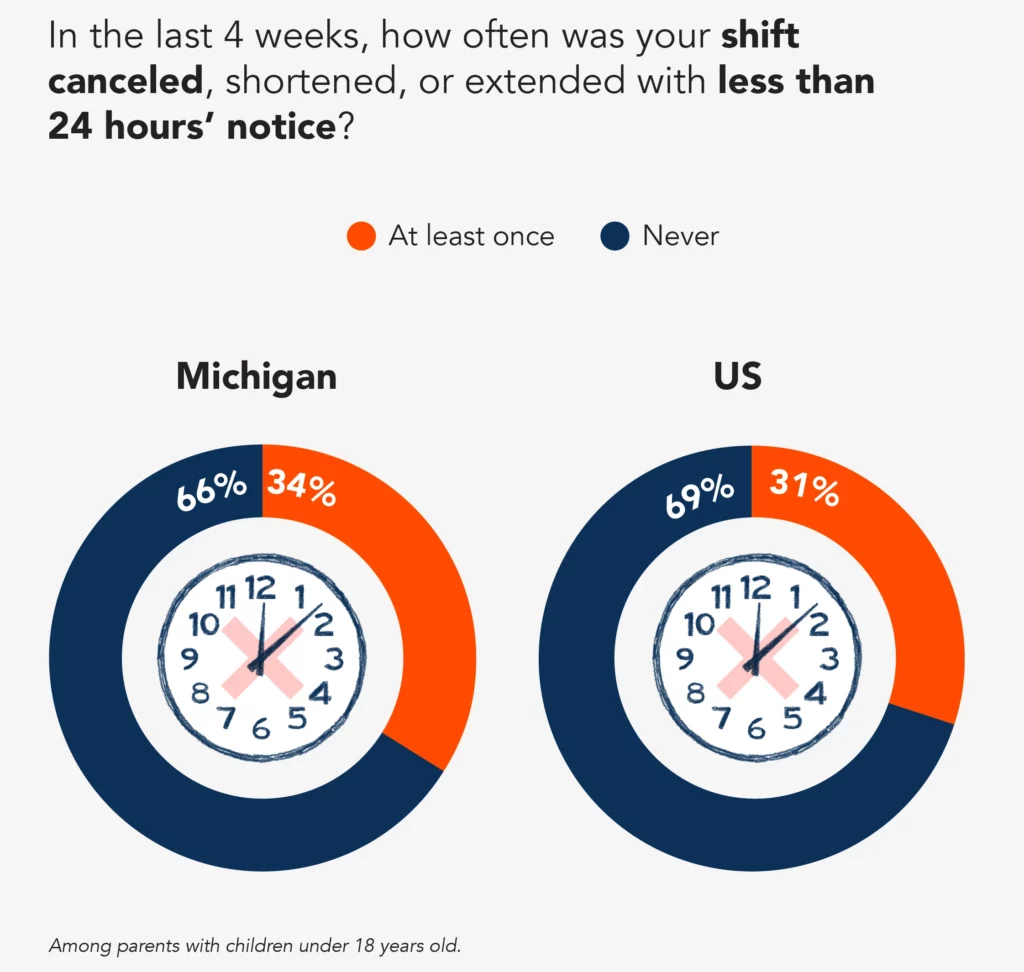
- Predictability: Just over one-third (34%) of Michigan parents reported having a shift canceled, shortened, or extended with less than 24 hours’ notice in the last month, consistent with what parents told us in the first wave.
- Quality of life: Over half of Michigan parents (56%) report feeling down, depressed, or hopeless within the last two weeks, a figure that has held steady across both waves.
We also examine emerging issues that shape the conditions families are navigating, including the rise of online sports betting, the lack of child care as a barrier to health care access, and the part-time work trap.
Financial Hardship
Michigan families are feeling financial pressures and are borrowing against their own futures to keep up with the present. This quarter, 41% of Michigan parents reported borrowing money, taking on debt, or using payday or cash advance products to cover basic needs in the last year, a 7% increase from the first wave. That figure is also significantly higher than the national average of 29%, and while the national number edged up slightly this quarter as well, Michigan’s gap remains pronounced.
Importantly, these pressures are not confined to families in the deepest poverty. Working-class households with steady paychecks are coming up short, too. More than half (54%) of Michigan families earning under $30k are borrowing or taking on debt just to cover the basics, compared to roughly one-quarter of families earning $100k or more. Middle-income households fall somewhere in between, with about 45% reporting the same.
 This is part of a broader pattern of financial instability that distinguishes Michigan from national trends. Michigan parents report higher rates of housing and utility hardship than their counterparts elsewhere in the country. Nearly one in four were behind on rent or mortgage at least once, compared to 17% nationally. Financial strain and crisis have already arrived for a significant share of Michigan families.
Unpredictable Work
For Michigan families, precarious finances are compounded by work schedules that offer little stability or predictability. Michigan parents were more likely to feel forced to take on additional hours due to financial necessity or work pressure than their national counterparts. Among all parents in our survey, 34% had a shift canceled, shortened, or extended with less than 24 hours’ notice at least once in the past month, a figure that has held steady since the first wave and is slightly elevated compared to national figures. That consistency is itself telling and shows unpredictability is a persistent feature of how many Michigan families experience work. The problem is most acute for hourly part-time workers with variable schedules, among whom 82% experienced these last-minute schedule changes.
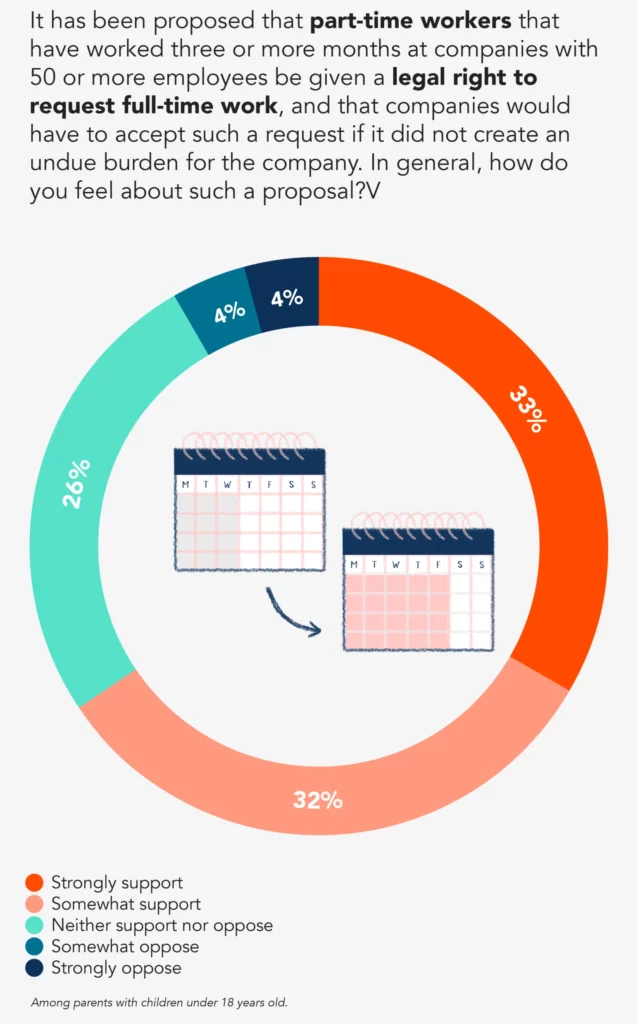
 Part-time work is an arrangement many families prefer as it offers a way to manage caregiving and household responsibilities alongside employment. Many large employers, however, have turned part-time work into a trap by deliberately keeping workers below full-time hours to avoid offering benefits, maintain scheduling flexibility for the company, and suppress labor costs. For workers, this means their hours are kept low, their schedules are unpredictable, and benefits are out of reach. A significant number of part-time workers would prefer to work full-time but cannot gain the hours to do so. Among the Michigan parents working part-time in our survey, 43% said they would prefer a single full-time job. This is what economists call involuntary part-time employment, and its consequences include income shortfalls, strain on household expenses, and the mental stress that comes with chronic instability.
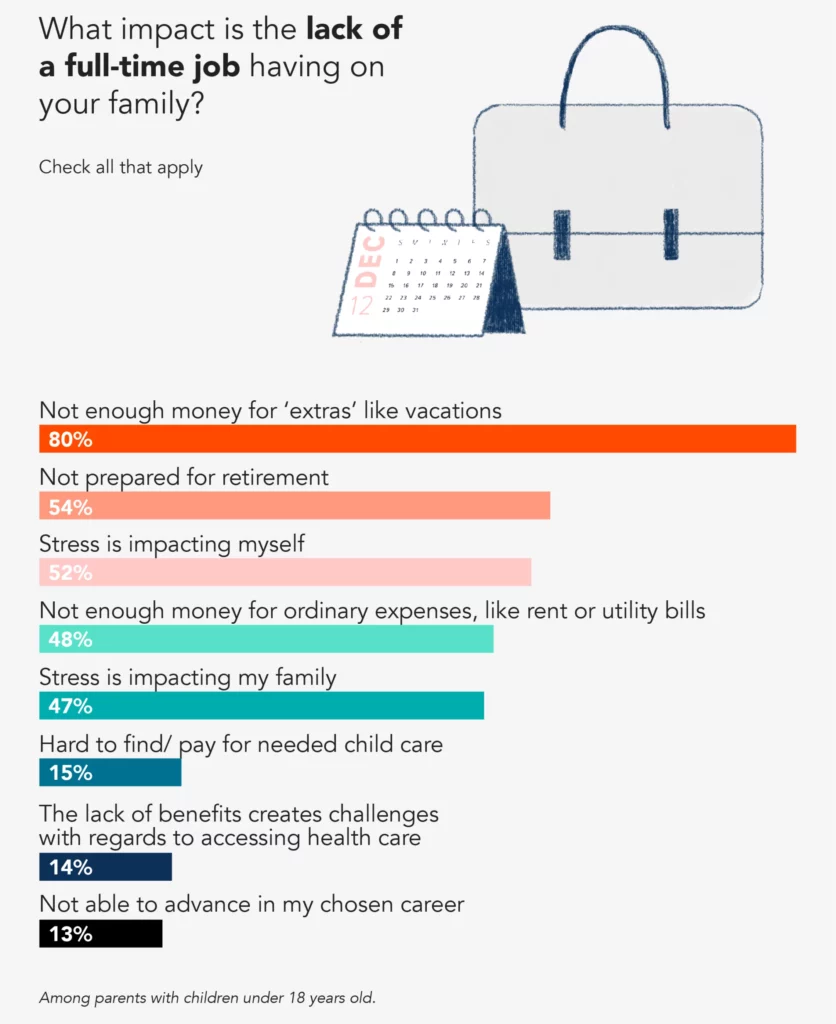 For families already stretched thin, and especially for those with young children, variable income and unpredictable schedules are profoundly destabilizing and make it difficult to maintain any consistency. Over half (56%) of Michigan parents said their work schedule disrupted their child’s routines at least once in the last four weeks. Unpredictability can also impact access to child care. In fact, more than one-quarter of the involuntary part-time workers we surveyed say that not working full-time makes it harder to find and pay for child care. When their hours vary wildly from week to week, parents find it nearly impossible to hold a consistent child care slot. Most formal programs require full-time enrollment or a fixed weekly schedule. Without reliable child care, working more hours stays out of reach.
The challenge extends beyond logistics. Volatile schedules can force parents to miss the moments that matter and not be as present as they would like to be. Consistent routines are foundational to children’s development, learning, and feelings of security. Chronically disrupting those routines can contribute to cognitive delays and behavioral challenges, particularly when instability begins in a child’s first year of life.
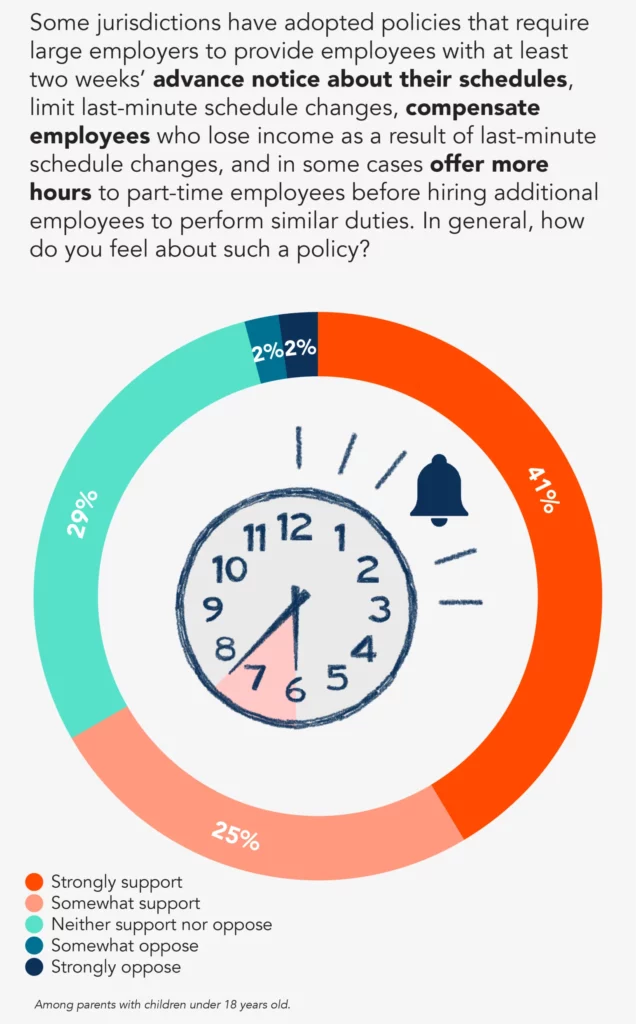
Michigan families could greatly benefit from more stable and predictable working conditions, as well as child care options that can accommodate the irregular realities of hourly work. Fair workweek policies have been adopted in several jurisdictions, and Capita has written about their promise as a policy solution. The majority of families we surveyed expressed support for these kinds of solutions.
Mental Health
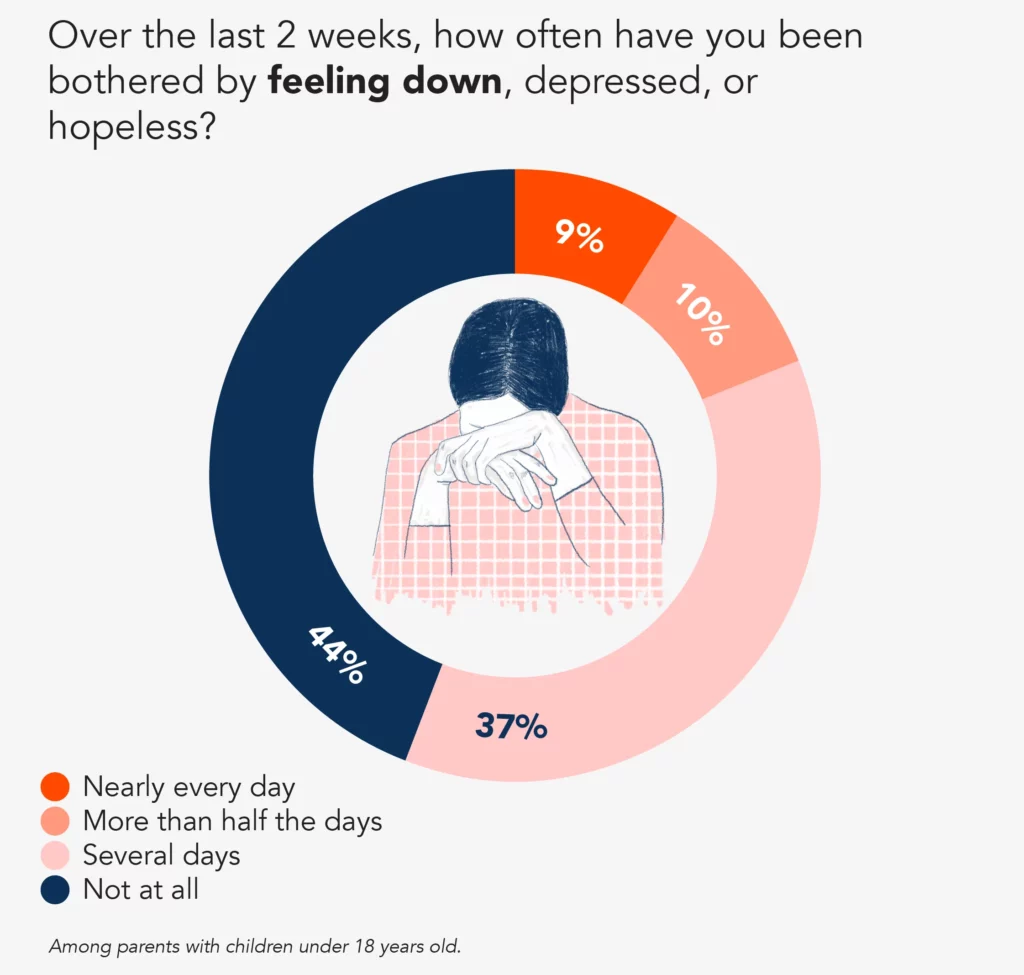
Parents are running out of bandwidth, and it is taking a measurable toll on their mental health. Three out of every four Michigan parents said they felt unable to handle all their family demands at least once in the past month. More than half (56%) reported feeling down, depressed, or hopeless over the last two weeks. As Capita’s prior research on loneliness has found, these kinds of emotional struggles are often downstream of other pressures (financial problems, lack of community, feeling stressed or overworked, the deterioration of family life, etc.).
Healthcare Access
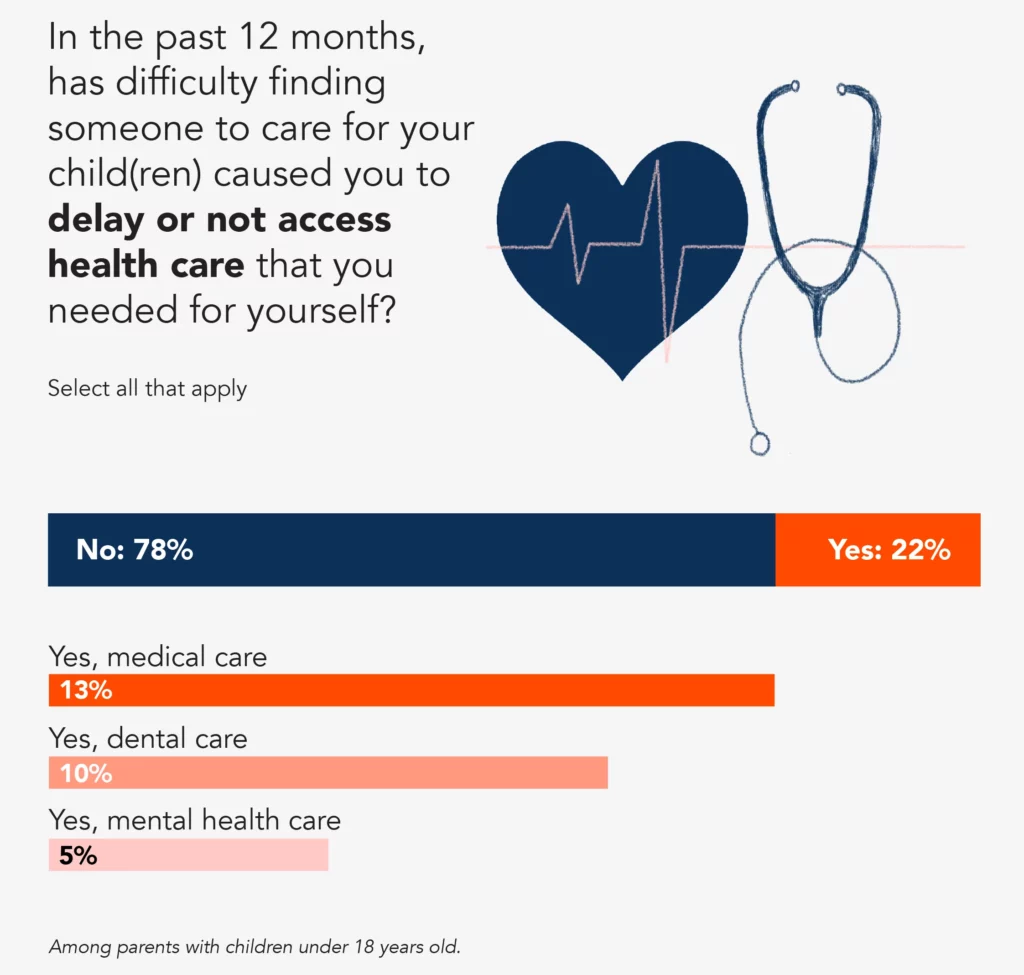
Delaying or forgoing health care is a pressing issue for parents in Michigan, with 43% of parents in our survey delaying health care for themselves within the past year. Among those, 22% said the reason was that they could not find or arrange child care. Parents are missing their own medical and dental appointments because they have nowhere to bring their children and no one to watch them. The lack of child care is a barrier to health care.
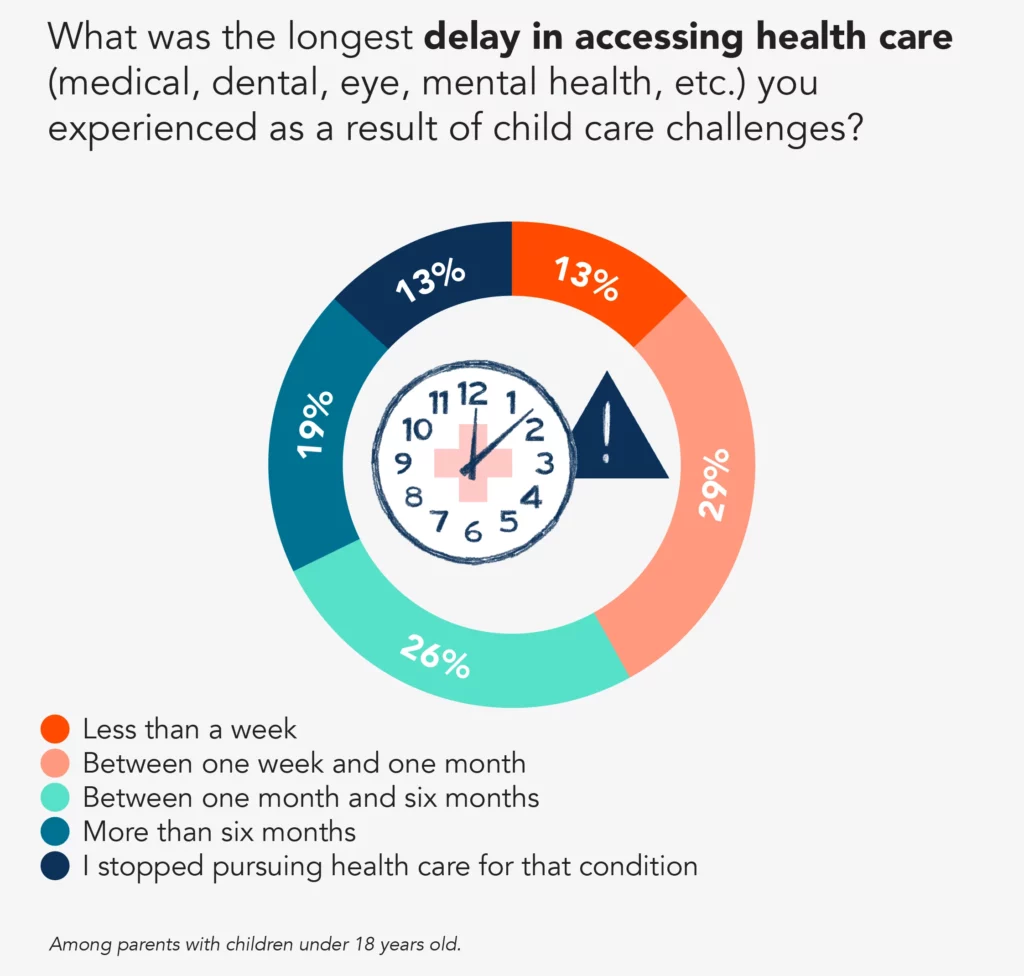
The stakes of those delays are higher than just missing an appointment. Most child care-related delays involve routine care or minor injuries, and while those may seem low-priority in isolation, deferred preventive care compounds over time. More concerning is that about one-third of parents who delayed care due to child care barriers were managing a chronic condition. Roughly one in five were delaying mental health care, a particularly concerning finding given that over half of Michigan parents report feeling down, depressed, or hopeless within the last two weeks. More than half (58%) of parents who delayed care waited more than a month; some stopped pursuing it altogether.
Limited access to child care creates barriers to pediatric health care access as well. Roughly one in ten Michigan parents reported delaying or forgoing health care for one child because they could not arrange care for another, which can have downstream implications for well-child visits, vaccination schedules, and routine pediatric care.
 Child care access defies easy categorization, as its reverberations can be felt across every dimension of family well-being. It is simultaneously a workforce issue, a child development issue, an economic issue, and, as this data shows, a health care issue. Treating it in isolation misses the fuller picture. The lack of child care is a structural barrier to health care access with significant consequences for families, and it deserves far more attention from those working in family, early childhood, and maternal and child health policy.
Sports Betting
Michigan launched online sports betting in 2021, making it one of the earlier states to do so. In the years since, betting has increasingly become embedded in everyday life. Its effects on household finances and family stability are worth examining directly.
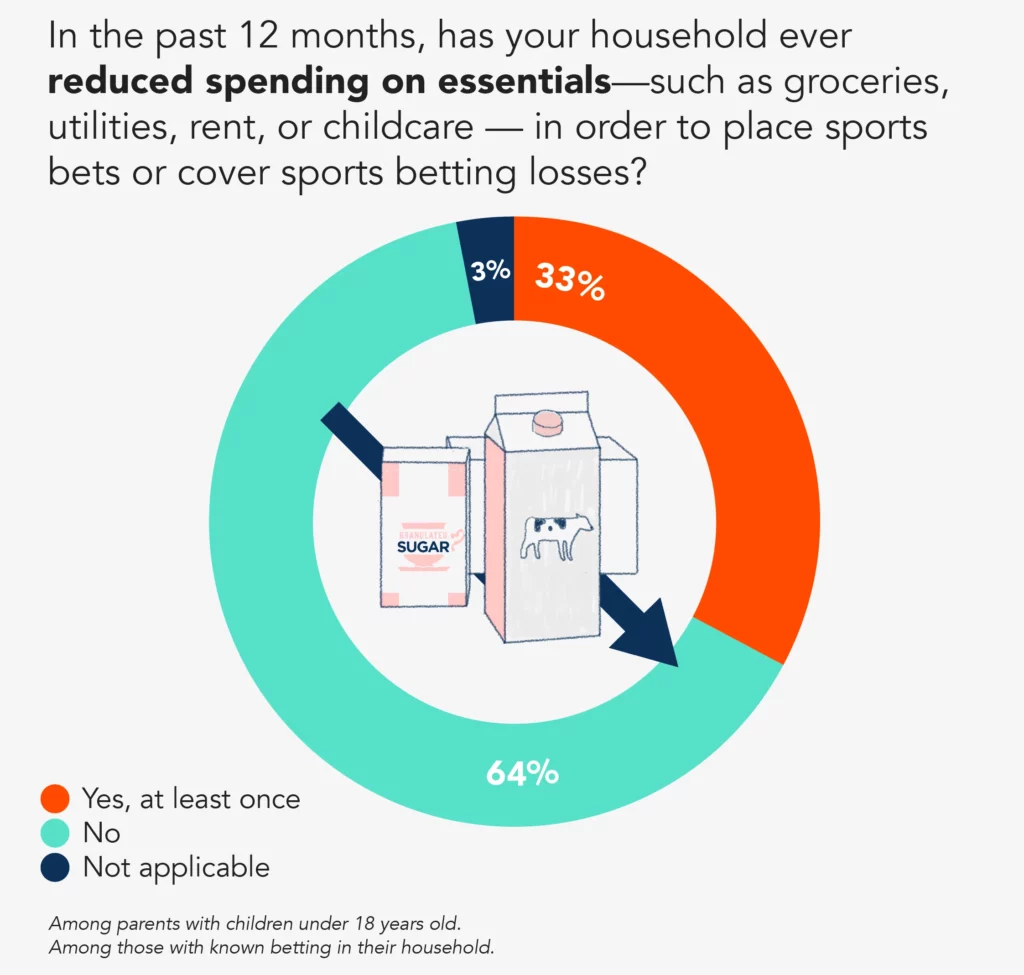
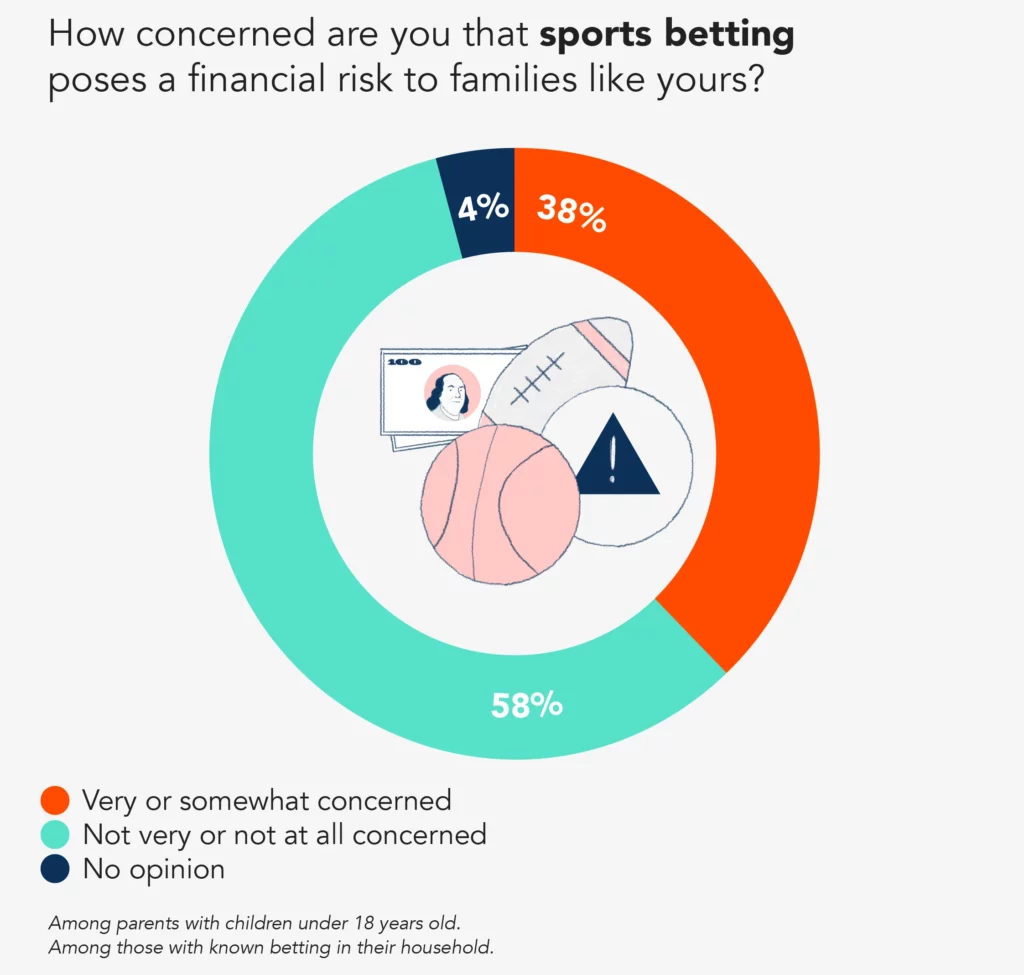
Consistent with national data, roughly one-third (34%) of Michigan families in our survey reported that someone in their household placed a bet on a sporting event in the past year, through an app, a website, or in person. Our data suggests that betting is an unpredictable financial variable that may further destabilize families who are already struggling. Among households with known betting, one-third reduced spending on essentials, such as groceries, utilities, rent, or child care, at least once to place bets or cover losses. The income breakdown sharpens the concern. Households in lower income brackets are more likely to cut essential spending to cover betting, indicating that families with the least financial cushion are absorbing betting placements and losses in ways that directly compete with basic needs. Additionally, nearly four in ten parents with known gambling in their household say they are somewhat or very concerned about the financial risks betting poses to their family.
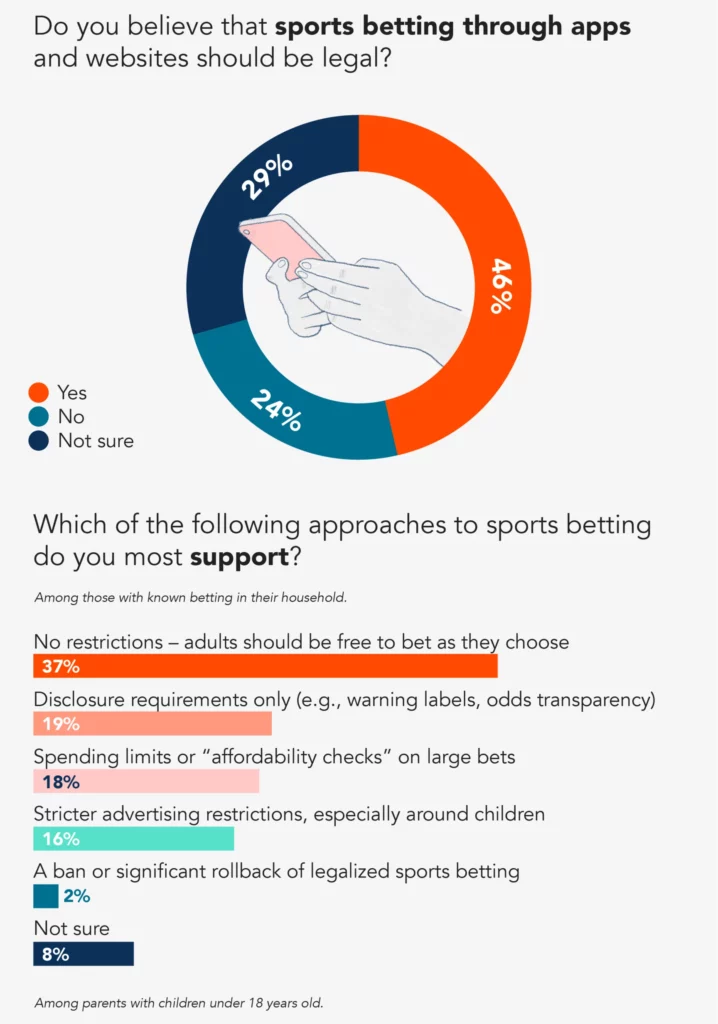
 Public opinion on sports betting reflects the genuine complexity of the issue. About 46% of Michigan parents believe it should be legal, which is 6 points above the national average and is unsurprising considering sports betting has already been legalized in the state. About a quarter think it should be illegal, and 29% are unsure. Yet, even among households with reported betting, the majority support some form of guardrails or restrictions, such as disclosure requirements, spending limits, or stricter advertising rules.
 Legal sports betting is impacting the stability, predictability, and quality of life of families, and its adverse effects are spreading faster than the policies governing its safety. A family lens has largely been absent from the sports betting debate, but this data makes a compelling case that it belongs there.
Quarterly Insights is not a study of isolated problems impacting families, but rather a deep dive into a problem that has many faces. Families are overworked and stressed. They lack the stability and predictability they need to flourish. The issues we describe compound: The debt that follows a canceled shift leads to a missed utility payment, the doctor’s appointment skipped because there was no one to watch the kids spirals into a hefty medical bill, the sports bet placed to cover a shortfall deepens it.
For a long time, families have believed that if they work hard and earn a paycheck, stability will follow. For too many Michigan families, that promise does not hold true and they continue coming up short.
We will continue surveying Michigan parents about their hopes, their fears, and their ideas, and tracking family well-being and the forces shaping family life in upcoming waves of Quarterly Insights. We hope this data helps illuminate where the gaps are widest, and where policymakers and advocates should focus their attention.
Methodology
On behalf of Capita, YouGov conducted a national survey totaling 1,000 parents with children under age 18, with an oversample of 200 parents in Michigan. The survey was fielded from April 14 to April 27, 2026. Given the relatively small sample size, the margin of error for Michigan-specific results is +/-7.7%. This means that the results, while valuable, should be interpreted with caution. The survey findings are available here and the cross-tabs are available here.
Elise Anderson is a Manager at Capita’s Family Policy Lab.
Related content

Quarterly Insights from America’s Families: New Pressures, Familiar Struggles
Insights from Capita’s latest national survey of American parents
Quarterly Insights from America’s Families: A First Look
Insights from Capita’s latest national survey of American parents.
Introducing Quarterly Insights from America’s Families
A New Lens on the Well-Being of All Families
