Over the last 10 years or so, there’s been a growing movement promoting early relational health, a renewed focus on maternal mortality, an intentional focus on social determinants of health, birth equity, and so on. Whatever you call it, it’s all part of the same, well-meaning effort to address disparities in women’s and family health and in outcomes for children and families.
This movement has largely been led by philanthropy and has focused on services, such as doula care, universal and targeted home visiting, group prenatal care, and the like. But there’s a problem: These services get layered on top of a broken system. It’s that underlying system — particularly reimbursement and specialty silos — that exacerbates many of the poor outcomes that require support services in the first place, by leaving rural and underserved communities without coordinated maternal and child healthcare.
We don’t just need new services to support women at risk of poor outcomes in pregnancy, childbirth, and the perinatal period. We need to reimagine the underlying system completely.
Rural communities are continuing to lose access to obstetric care, resulting in worse outcomes for mothers and babies.
Any serious conversation about the future of maternity care in America has to start with an uncomfortable fact: rural communities are continuing to lose access to obstetric care, resulting in worse outcomes for mothers and babies. And when policymakers, funders, and advocates do gather to talk about solutions, family medicine — the specialty holding the line in many of these places — is too often left out of the room.
We write as three people who see this problem from different angles: a policy leader, a rural family medicine residency director, and an academic family physician who has dug into the numbers. Together, we think the crisis in rural maternity care and the dysfunction in how we pay for women’s and family health are the same story. We hope our experiences offer a window — particularly for philanthropists, funders, and advocates — into the deeper issues that must be tackled to truly improve maternal, child, and family health outcomes in the United States and to ensure that pregnancy, childbirth, and the perinatal period are as joyful, celebratory, and equitable as we can make them.
The Scale of the Rural Obstetric Gap
According to the most recent March of Dimes report, one in three U.S. counties is a maternity care desert, meaning it has no birthing hospital and no clinician providing obstetric care — affecting 2.4 million women and 149,000 infants. In our home state of North Carolina, 14 rural hospitals stopped offering labor and delivery services between 2014 and 2024. As of 2024, 18 North Carolina counties — every one of them rural — are considered maternity care deserts
The gap between urban and rural outcomes is widening.
Longer travel distances and reduced access to rural obstetric care are linked to higher rates of preterm delivery, maternal mortality, and infant mortality. In 2019, rural maternal mortality was nearly double the urban rate (81.7 vs. 42.3 per 100,000 births). The infant mortality rate is 27% higher in rural than in large metro counties; that gap widens to 50% in the postneonatal period when outcomes depend most on local access. Between 2014 and 2024, urban infant mortality decreased by 6%, while rural infant mortality did not budge; the gap between urban and rural outcomes is widening (source).
Family Medicine Is Already Filling the Need
Despite a national decline in family physicians providing obstetric services, they still outnumber obstetricians and midwives combined in rural counties with any remaining maternity care.
That’s why training matters so much. Rural family medicine residency programs — like the one where two of us (Benedum and Smith) serve as faculty — develop physicians who can provide high-quality prenatal care and staff labor and delivery units in communities that would otherwise not have them.
Yet specialty silos mean family medicine groups are frequently left out of the strategic conversations shaping the future of maternity care. These conversations about funding, workforce, and policy often assume OB-GYN and midwifery are the only players on the field.
A Billing System That Doesn’t Reflect the Work
The second piece of this story is money — specifically, the Resource-Based Relative Value Scale (RVU) system that determines how physicians are paid. In 1991, the American Medical Association (AMA) established a scale assigning the relative value to every code or billable service a physician performs; these relative value units (RVUS) are now used as a way to measure physician productivity, reimbursement, and compensation. RVUs are set by a committee of 32 physicians (22 of whom are specialists). This system is widely understood to devalue cognitive work and longitudinal care, and has also been criticized for a lack of transparency and objectivity. RVUs and reimbursement also systematically devalue women’s health and procedures performed on female anatomy versus male. One of us (Smith) looked into why reimbursement for primary care and women’s health is so poor, using RVU data from the American Academy of Professional Coders, a coding and billing standards body whose figures closely track monthly RVU reports.
The comparisons are hard to justify on the merits. Inserting an IUD — a procedure that carries real risk of pain, infection, or uterine perforation if something goes wrong, and takes about 20 minutes even in a smoothly run clinic — is valued at 0.98 RVUs. Removing a benign lipoma from the skin, a lower-risk procedure, is valued at 6.71 RVUs: nearly 7 times as much. Freezing a wart, a two-minute procedure, is valued at 0.68 RVUs — not far behind the IUD insertion at all.
The pattern holds when you scale up. The global package for a full pregnancy — every prenatal visit, labor, delivery, and the hospital stay — is worth 37 RVUs. A routine, uncomplicated pregnancy (increasingly rare in the U.S.) involves around 15 office visits plus two days of hospital-based care: 17 total encounters. Compare that to four hours of moderate-complexity office visits (sinus infection, UTI, high blood pressure follow-up), which generates 27 RVUs.
Come January, the global maternity package will be unbundled into separate billed components. Early indications we’ve seen and heard from financial consultants suggest this won’t meaningfully affect the bottom line for rural hospitals delivering this care. The underlying undervaluation will persist even after the accounting changes.
In rural communities, birth volumes are too low to cover fixed costs in labor and delivery (staffing, anesthesia, etc.), Medicaid rates reimburse below the cost of care, and with the One Big Beautiful Bill Act, the most vulnerable patients are at risk of losing Medicaid coverage entirely. Not to mention the challenges of recruiting a maternity care workforce, including nurses, obstetric providers, and surgical backup. Rural hospitals also do not operate NICUs, which generate revenue that can offset losses from labor and delivery.
The Two Problems Are One Problem
The reason rural hospitals keep closing labor and delivery units, and the reason family medicine groups can’t expand their scope of practice into obstetrics even where the need is greatest, comes back to the undervaluation of the work itself.
It would be easy to treat rural obstetric access and physician reimbursement as separate policy tracks — one a workforce and geography problem, the other a technical billing problem. We don’t think that’s right. The reason rural hospitals keep closing labor and delivery units, and the reason family medicine groups can’t expand their scope of practice into obstetrics even where the need is greatest, comes back to the undervaluation of the work itself.
Any serious plan for the future of prenatal care needs two things it doesn’t consistently have today: a seat at the table for family medicine alongside OB-GYN and nurse midwifery, and a willingness to look honestly — and uncomfortably — at how we value the services and the people providing them. That will mean ruffling some feathers. It’s overdue.
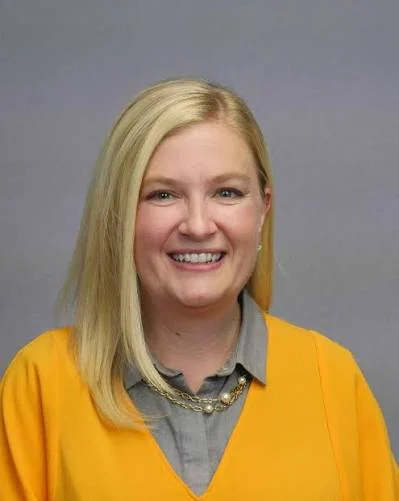
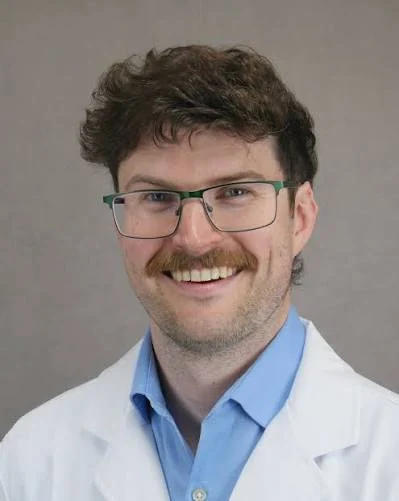
Molly Benedum is the Executive Director of Academics at UNC Health Appalachian and Director of the Boone MAHEC Family Medicine Residency Program, where Caleb Smith serves on the faculty. Both are Clinical Assistant Professors of Family Medicine at UNC-Chapel Hill.
Joe Waters is the Co-Founder and CEO of Capita.